Overview
Reducing greenhouse gas emissions is one of the greatest challenges of this century, particularly for industries where decarbonization is complex. To address this problem, researchers at the Federal University of Pernambuco (UFPE) recently completed the project “CO₂ Capture from Industrial Stacks: Technologies, Challenges and Solutions”, which developed a broad overview of the most efficient technologies for stopping pollution directly at its source.
Supported by the Pernambuco State Foundation for Science and Technology (FACEPE), the study conducted a rigorous survey of global scientific production between 2015 and 2025. Its goal was to understand which technologies are being developed, the challenges involved in their application and how they can be implemented to capture carbon dioxide before it reaches the atmosphere.
Featured technologies
The research examined dozens of approaches and selected 54 key studies for its database. The scientific team identified seven distinct technological routes for carbon capture. Among the most prominent are calcium-based sorbents, solid adsorption and chemical absorption. The study also found that although the efficiency of some technologies, such as amine absorption, can exceed 90%, important challenges remain, including high energy demand and dependence on electricity in large-scale operations.
Impact and innovation
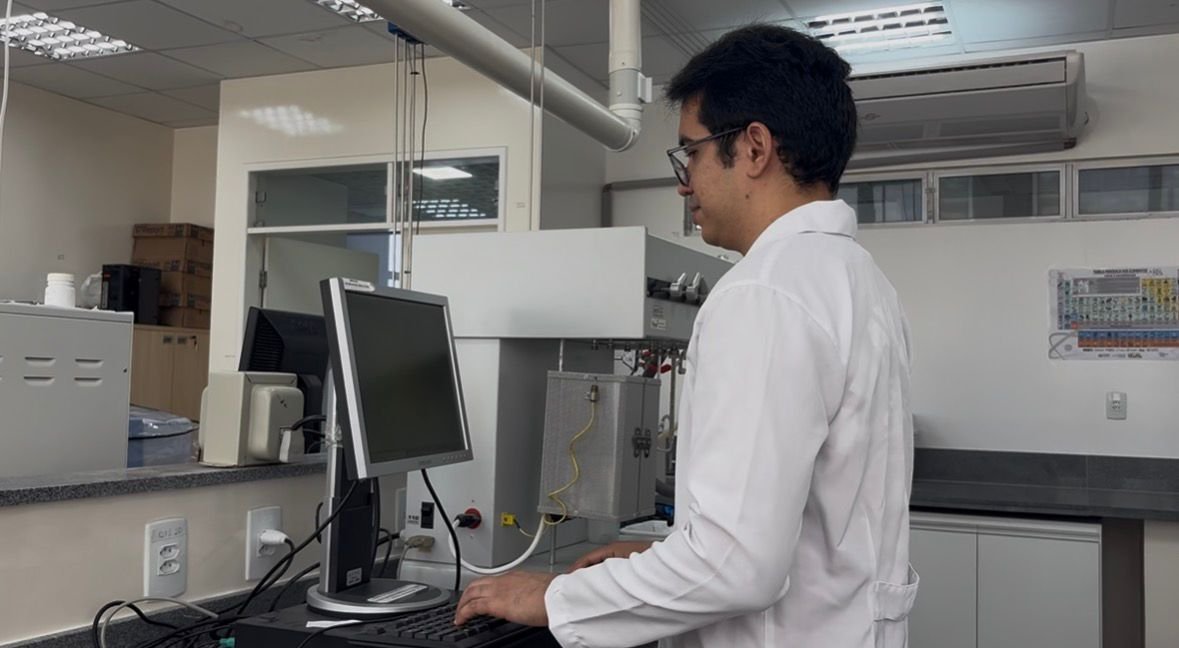
More than a theoretical review, the project led by general coordinator Prof. Dr. Rômulo Simões Cezar Menezes, with technical guidance from Prof. Dr. Gilson Lima da Silva and work carried out by researcher Laíza Bianca da Cunha Torres, generated practical tools. The team structured a technical and scientific database and received training in SimaPro, software that is essential for Life Cycle Assessment. The group now has the infrastructure to calculate not only how much CO₂ a technology captures, but also its full environmental impact.
Next steps and industrial partnerships
The results are already being prepared for publication in a high-impact scientific article and establish a solid foundation for expanding the study at postgraduate level, including master’s dissertations and doctoral theses.
Beyond academia, the knowledge generated is ready to support real industrial applications. The information is expected to help companies select the most suitable capture technologies and foster new partnerships between UFPE and the productive sector to validate these solutions under real operating conditions.